
‘Why moving a hive requires understanding the mathematical rules of bee navigation
It probably isn’t safe to dabble in bees unless you have protective gear and experience, but for a while we kept bees and had a small apiary here. As recognised bee keepers we could sometimes be called upon to assist when bees had set-up premises in less than ideal locations.
Here is a bee story which allowed some wonderful photos to be taken.
A wild colony of bees was reported living in a dustbin in a local town by an elderly resident.
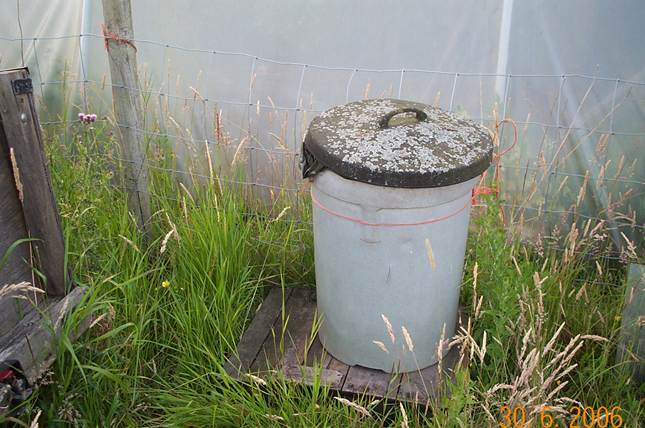
Luckily the owner had not disturbed the colony and had the good sense to contact the council who in turn contacted the local beekeepers’ association who contacted us. It was decided that the colony could not be allowed to remain in the middle of a built-up area as at full strength it would contain many thousands of bees. Also, for the good of the colony, they should ideally be placed in the controlled conditions of a hive, which would ensure that they could be correctly managed and fed (if necessary) to ensure that they lived through the next winter. Something that may not been achieved by the colony in their natural state.
Bees have a wonderful ability to know where they are and a couple of rules apply when you move them. These are, that you can move them less than 3m and they will find their original hive easily, but if you need to really shift them then you must move them more then more than 3 miles to reestablish them in a new location. At the time we didn’t need more bees, but a new beekeeper was starting out and wanted them in a new hive, but his apiary was within 3 miles of their original bin. So we took them via our location, which gave a clear 3 mile radius for each movement. This prevented the poor bees from just flying back to their original garden and finding no home bin!
So one warm June night we pushed the ‘slightly off centre lid’ (the bin bees doorway) back onto the dustbin, collected it in the car and removed the colony to our apiary.
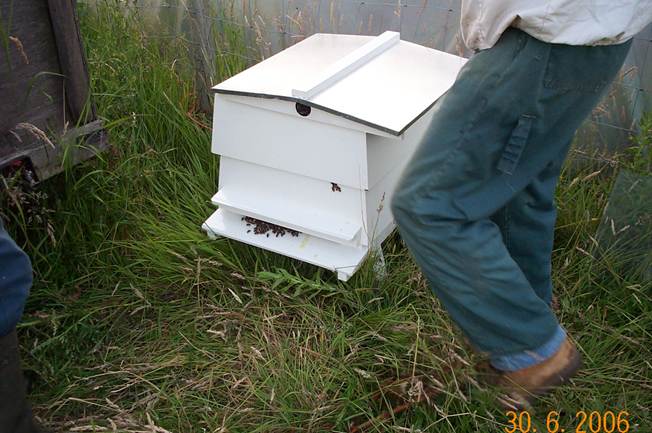
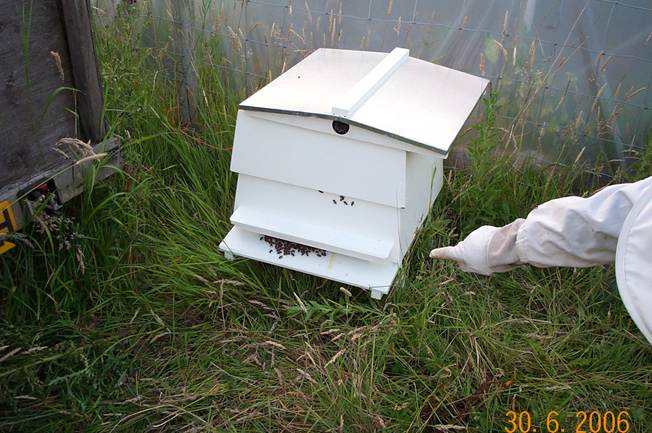
A week later we reconvened and transferred the bees to a new WBC hive (which is the style of hive with the lovely classic white sides).
The gave a rare opportunity to see the structure of wax built up by a wild colony of bees without having to destroy it to access the colony in the first instance. The wax hanging on the underside of the dustbin lid had been entirely formed from natural waxes brought back to the bin by the working bees, rather than being initially developed from wax provided in frames by the beekeepers (which is what happens in a managed hive when the beekeeper provides rectangles of pre-formed wax as a template) It shows one of nature’s highlights – a natural regular shape and hexagonal slightly upward pointing cells (so the bees honey doesn’t fall out!) entirely developed by the cooperation of the colony.
The pictures show the covered ‘brood’ (developing bees) in the centre of the wax combs, and show the beginnings of the next combs that would have been developed by the bees if they had been left undisturbed.
After leaving the hive to establish for a week or so they were transferred to final premises one evening. In case you are wondering we close colonies up and move them in the late evenings to ensure that all the flying bees have returned home and are not left behind when the colony is moved. We are pleased to report that we think the two transfers were completed successfully and no-one reported vagrant bees returning to an empty site.
The colony successfully established in the WBC hive and all the brood existing on the original wax frames hatched successfully by being left on the crown board of the hive under the roof. This process allowed the bees to access and tend the brood, but as it was above the queen excluder in the hive, the queen could lay no more new eggs in it once the brood hatched and meant the empty combs can then be removed once empty.